Serious Games

Oh My Git!
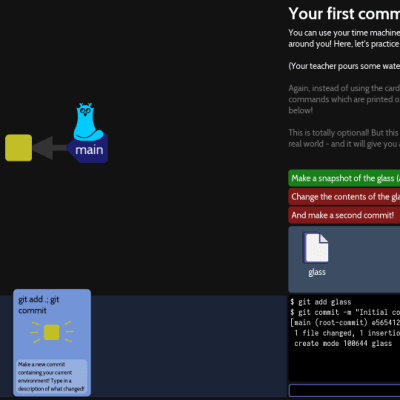
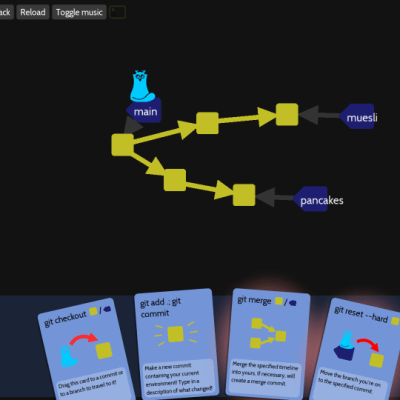
Oh My Git! is an open-source game in English that introduces players to the popular version control system Git. It is highly interactive and aims to develop an intuitive understanding of operations such as merging and rebasing. Players are guided step by step through Git’s features; each level tells a short story in which they can use their newly acquired skills to solve problems or help others.
Metadata for Reproducibility– Modular Construction Bricks
The "Metadata for Reproducibility method - Modular Construction Bricks" is an interactive training method for 4–24 players that helps researchers determine which metadata they need to assign for better reproducibility.
BioMandate 2045
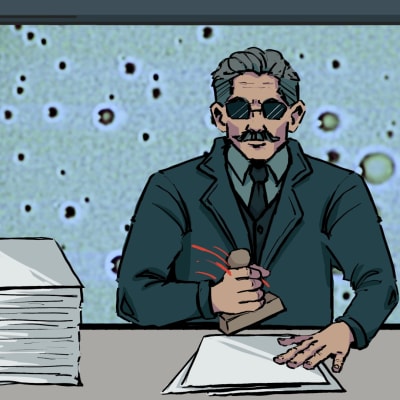
BioMandate 2046 is an award-winning narrative strategy game about regulating emerging biotechnologies. Review proposals, investigate risks, and balance political, economic, and ethical consequences in a near-future world.
Ohtli
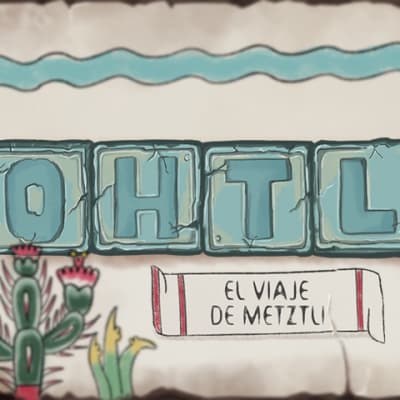
Metzli's journey
Ohtli: The Path of Metztli is a 2D narrative adventure about preserving Mexica heritage. Play as Metztli, a young restorer who journeys to rescue ancient codices before they fade away. Guided by an old spirit and a librarian friend, you reconstruct fragmented manuscripts and uncover the worldview of ancient Mexico through platforming, puzzles, and purposeful minigames.
Age of the Moon
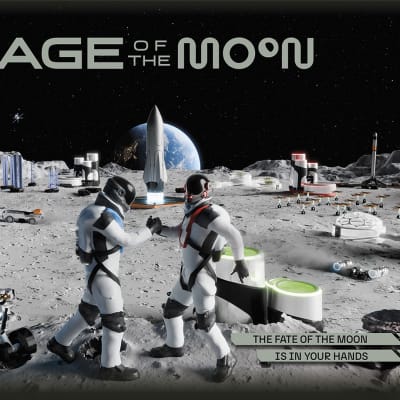
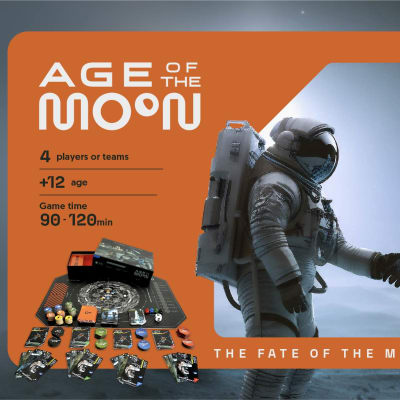
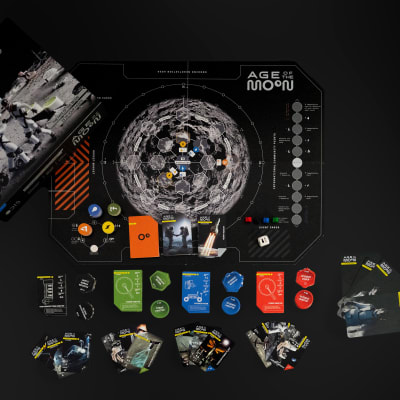
Age of the Moon is a strategy board game that places players at the heart of the race to build the first operational lunar base at the Moon’s South Pole. Combining competition, diplomacy, resource management, and realistic mission planning, players must navigate dynamic lunar events and high-stakes decisions in a scientifically grounded vision of the New Space Era. Designed for 2–4 players or teams and lasting 60–90 minutes, the game was developed as an international educational initiative and tested with experts connected to ESA, NASA, SGAC, and the International Space University. The project was successfully funded on Kickstarter in 2024.
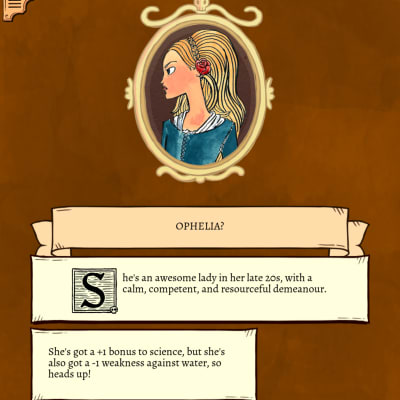
To Be or Not To Be
The choose-your-own-adventure game “To Be or Not To Be” reimagines and remediates William Shakespeare’s “Hamlet”. The digital game was released in 2015 by the developer Tin Man Games, based on the gamebook by Ryan North (2013). It offers players the option to play as Hamlet, Ophelia or King Hamlet, and manipulate events, thereby altering the narrative. The main object is for players to experience alternative storylines through the decisions they make as the game progresses. The game caters for a varied target audience as it appeals to those with an interest in literature, comedy, and interactive storytelling. Thematic elements include fate versus free will, and formal aspects involve, among others, satire, parody, and the reinterpretation of classic literature through a modern, humorous lens. Though not strictly designed as a serious game, “To Be or Not To Be” may be seen as combining educational content with entertainment, engaging users in active decision-making while also offering insights into the play’s structure and themes. The player reads text and selects options that influence the story’s direction.

My Five Moments: The Game
My Five Moments: The Game is a free online game developed by the World Health Organization (WHO). It aims to teach the principles of hand hygiene improvement at the point of care in a virtual clinical environment, and it is geared toward medical students, nursing students, physical therapy students, others, and infection control educators who are doing lessons on hand hygiene. Players need to take care of their patients by doing common clinical tasks (e.g., taking blood pressure, drawing blood) while also ensuring that they are doing hand hygiene at the right moment, according to the ‘My 5 Moments’ approach, a framework developed by WHO. Players also need to compassionately respond to the patients by helping them (e.g., taking care of a pet, connecting them with their loved ones). The game takes place in a future fictional clinical universe—the International Alien Hospital—and all of the patients are aliens from different planets, who have different needs. This game challenges players to prevent two key infectious threats (microbial cross-transmission and healthcare-associated infections) through timely hand hygiene.
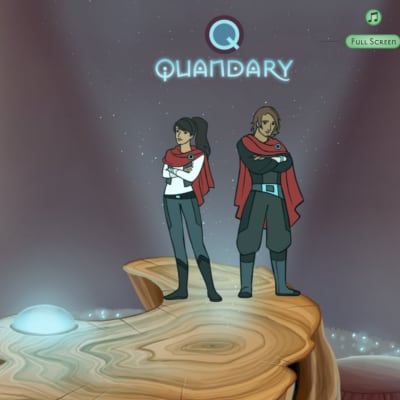
Quandary
Quandary is an online, browser-based, free, single-player educational game that aims to teach ethical thinking, reflection, argumentation, and problem solving. The game was initially designed for middle and high school students, but has also been used effectively for higher education (university settings). In Quandary, players take on the role of a captain who is collaborating with others to build a new society on a fictional planet called Braxos. They face various challenges, such as what to do about missing sheep, which may have fallen prey to the Yashor, a native creature of Braxos. Players must investigate the situation by gathering evidence from community members, distinguishing between opinions and facts, and formulating a solution.
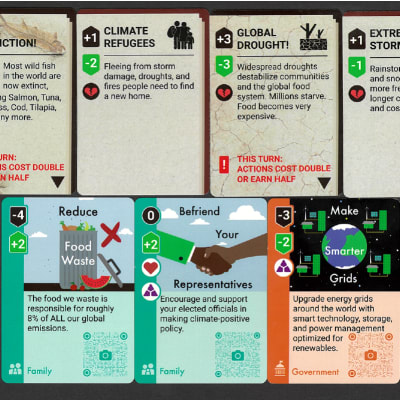
Green House
Green House is a card game designed for players 12 and older to save the planet from the effects of the climate crisis. Developed by Alix Dvorak and Adam Lupu, this card game provides players with 64 “Solution-Focused Action Cards,” focused on the ways families, businesses, nonprofits, and government entities can address the climate crisis. In team play players collaborate and consider how to act on events. Backed by a Kickstarter project in 2020, Limitless Harmony first published the deck to backers and is now available on the Green House website. Players grapple with obstacles such as pollution, time, cost, and hopelessness as they take actions to “clean the sky”. Green House provides a low floor for entry into the game as you do not need to be an expert on the climate crisis to play. The creators describe several reasons to focus on the climate crisis within a gaming context such as providing the opportunity to discuss these big ideas with friends and family as well as making it easier to access and understand possible solutions.
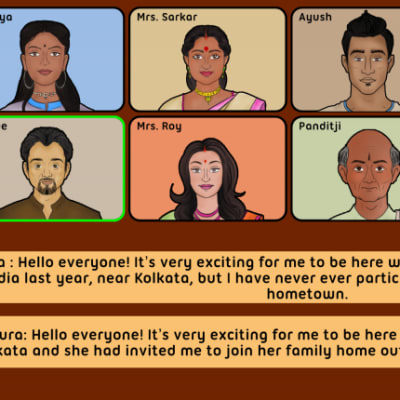
Durga Puja Beyond Borders
The educational video game Durga Puja Beyond Borders introduces to Indian festival culture, by focusing on Durga Puja. Today, Durga Puja is not only widely celebrated in India, but the festival is also a highly important event for global Indian communities. The game uses aspects of management games to playfully yet educationally introduce various layers of Durga Puja festival culture, such as joint Durga Puja organizations and especially celebrations. It conveys educational content about the festival’s history and past and present ways of worshipping and jointly celebrating, in India and beyond. Moreover, it allows a glimpse into how festivals are important events and locations for migrant communities to live and negotiate identity, heritage, and culture – beyond borders. This game invites you to join the festival in an exemplary global Indian community, in the so-called Indian diaspora, in Helsinki, Finland. In Durga Puja Beyond Borders you play as Laura, who takes part in organizing and celebrating a Durga Puja event hosted by a local Indian community.
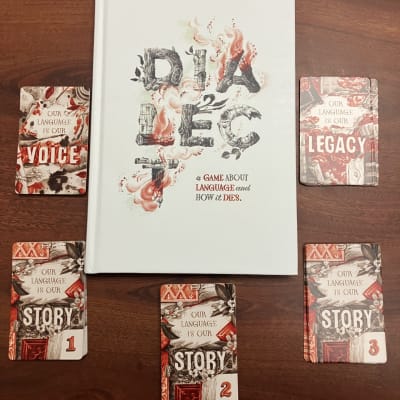
Dialect: A Game About Language and How It Dies
Dialect is a table-top role-playing card game (TTRPG) developed by computational linguist Kathryn Hymes and Hakan Seyalıoğlu, mathematician and cryptologist, the game designers and founders of Thorny Games. The goal of Dialect is for players to learn about language change and endangerment as they take on the roles as members of a community (known as the “Isolation”) that is at the margins of a wider dominant society. As players move through the different stages of the game, they create a language of their own and use their new words as they interact with other players. The language changes in response to different events in the game, and eventually their language is lost as their community dies off or is subsumed by the wider dominant society. What makes Dialect unique is that, from the onset, players know that the community they create, and its language, is doomed. How and why the end comes, however, changes every time the game is played, as does the language that players create.
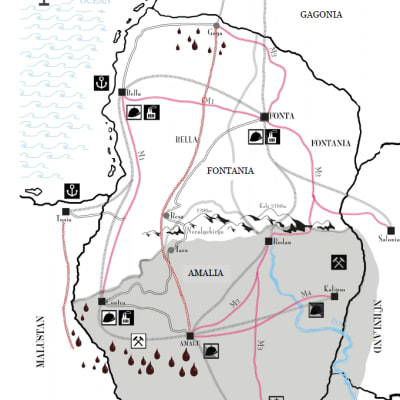
“The Fontanian Question” – Action-Oriented Game on Violent Conflict in a Resource-Rich Country
“The Fontanian Question” is an on-site, analogue simulation game that immerses participants in the socio-economic and security dilemmas faced by a fictitious country endowed with abundant natural resources. By placing the participants in the roles of various stakeholders - from government entities and oil companies to rebel groups and local communities - the game explores who profits from resource extraction and how competition over valuable commodities fuels or mediates internal conflicts. As a serious game, it combines experiential learning with real-world political and economic dynamics. Through direct engagement in negotiation and conflict-resolution processes, participants gain a deeper awareness of the complex interplay between wealth, power, and violence in resource-rich settings. The game is suitable for ages 16 and up, although its complexity makes it a better fit for university students. Prior knowledge of the subject matter is not required, making it suitable for students from a variety of disciplines. However, it fits most naturally with undergraduate and graduate students in political science, international relations, development, and peace studies. The game was developed by planpolitik in 2012.
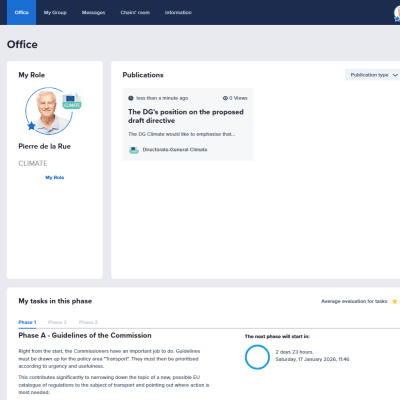
Simulation game “Green Europe? Lobbying in the European Union using the example of climate policy”
“Green Europe? Lobbying in the EU using the example of climate policy” is a blended-learning simulation game that places participants in the midst of environmental policymaking within the European Union (EU). Developed and delivered via planpolitik’s digital simulation platform Senaryon, the game addresses the question of how different stakeholders - ranging from European Commission (EC) services to industry, consumer, and environmental lobby groups - collaborate and compete to influence legislative proposals aimed at reducing CO₂ emissions from cars. Repeatedly, participants from multiple universities, including the Georg-August-Universität Göttingen and the University of Antwerp, have used this simulation to engage across countries, time zones, and academic programs, gaining firsthand experience of the EU’s complex interplay between policy drafting and lobbying activities. This cross-university setup enables collaboration between diverse academic backgrounds and mirrors the distributed nature of EU policy work. The game may be used fully online and asynchronously, in a blended format that combines online preparation with face-to-face elements, or entirely on-site with digital support. Below, we focus on the blended/online iteration. Its mixed-format design builds on established approaches to combining online and in-person simulation elements.

Blended-learning simulation game “Future of the EU”
In the European Council, heads of state and government make landmark strategic decisions for the further development of European cooperation. The agenda includes current challenges and institutional problems, such as the growing divisive tendencies within the EU and the democratic deficit, as well as further questions of future integration, e.g. strengthening the social dimension, the conflicts over asylum and migration issues, or the future enlargement of the Union. The game is played using planpolitik’s digital simulation game platform Senaryon. It can be played in a blended-learning setting, in which a preparatory online phase is combined with on-site negotiations, completely online and asynchronously, or it can be played entirely on-site with interactions supported by the digital platform. In the following, we describe the blended-learning version of the game.
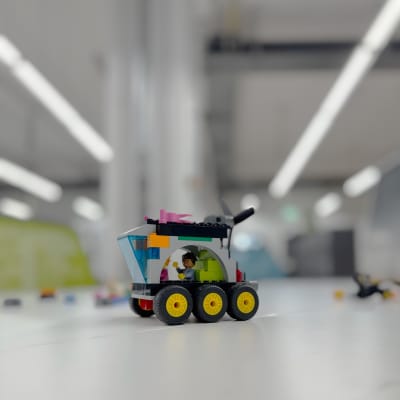
Brick Motors
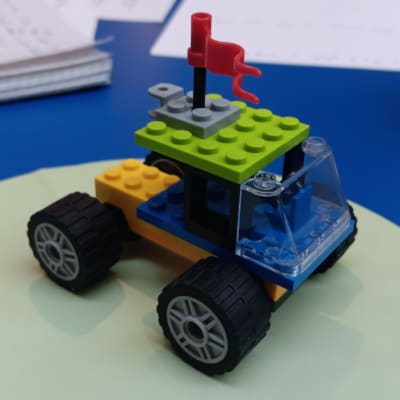
Brick Motors is a serious game developed by Kerstin Schickendanz, Lecturer for Entrepreneurship at TH Köln, designed to instruct students in the principles of product development and innovation management. The game is grounded in the Stage-Gate® process (Cooper, 2022) and challenges participants to design and construct a LEGO® vehicle, navigating through iterative development stages while making strategic decisions regarding resource allocation, performance optimization, and creative design. The game is tailored for university students across various innovation-related disciplines, including business, engineering, and information technology. It has been specifically developed to integrate seamlessly into a regular course structur, problem or game-based learning environments, offering a structured, hands-on approach to mastering complex decision-making frameworks. Through this simulation, students gain practical insights into real-world product development dynamics, fostering both strategic thinking and collaborative problem-solving skills.
Sustain2030® SDG simulation game
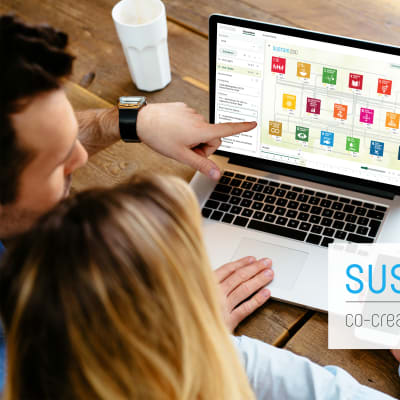
The Sustain2030 SDG simulation game is based on the UN Sustainable Development Goals (SDGs) and addresses the interrelations between the SDGs. Sustain2030 outlines approaches for dealing with the SDGs by presenting the basics of systems thinking methods. The target group of the simulation game includes employees in companies and municipalities as well as employees and students at universities. The idea is to playfully raise awareness of the SDGs and sustainability and furthermore motivate participants to take sustainable action. In the simulation game players take on the role of a citizens' council for sustainable development representing different perspectives on the SDGs. Their mission is to make a substantial contribution to achieving the 17 SDGs by selecting suitable measures. A key element of the simulation is the SDG system model which visualizes the interrelations between the SDGs and the indirect effects of the decisions made. The players are confronted with various challenges that they can only solve together. Sustain2030 was developed in 2021 by iCONDU, a small consulting company dedicated to driving sustainable transformation.
HeartSelling
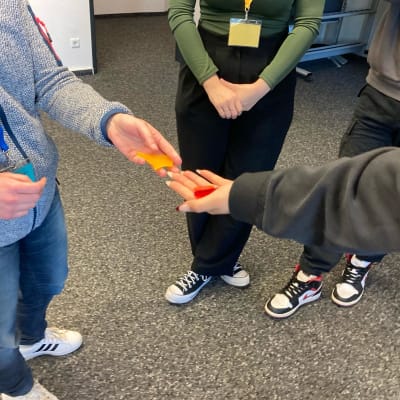
HeartSelling adresses fair and value-based trade, dealing with competition and cooperation. The objective is to initiate a discussion on value-oriented trade. It is aimed at people in sales and negotiation, as well as teams who want to explore the topics of communication, transparency and cooperation. HeartSelling fulfills the components of a serious game: simulation, game, role and learning.

The Durga Puja Mystery
The educational video game The Durga Puja Mystery introduces to Indian festival culture, by focusing on the popular and widespread Hindu festival Durga Puja. Today, Durga Puja is not only widely celebrated in India, but the festival is also a highly important event for global Indian communities. The game is a third-person 3D adventure game, filled with mystery and using educational puzzles, riddles and tasks. It takes place inside and around a majestic heritage mansion near Kolkata, India – during the time of Durga Puja, of course! The game is part of a set of two educational video games on the festival, developed specifically for university teaching. The Durga Puja Mystery (2020) and Durga Puja Beyond Borders (2021) can be played in combination or as stand-alone games, depending on the player’s interest.
The Fishing Game
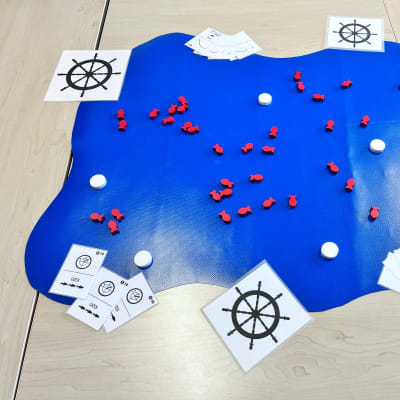
The Fishing Game addresses the handling of scarce resources, economic behaviour and coordination processes with others, and deals with topics such as dealing with common goods, ethics and morals, handling scarce resources, the common goods vs. personal profit and much more. It thus joins a series of simulation games on the topic of overfishing (Fishbanks by Dennis Meadows, Fish Pond by iconomix/UCS Markus Ulrich), which focus on the topic of common goods with a similar game mechanism. The target user group comprises individuals aged 12 and over from all sectors, professions and social classes. The game deals with a severe problem of sustainability and can therefore be described as a serious game. Four companies are located at a pond from which they can take fish. Initially, they only have one fishing rod at their disposal. Over the course of the rounds, the revenue generated can be used to buy more boats with or without fishing conditions. Market and price developments as well as fish stocks must always be considered. The game was developed by Molleindustria for the Allied Media Conference 2013 and is freely available.
UBONGO Flow Game
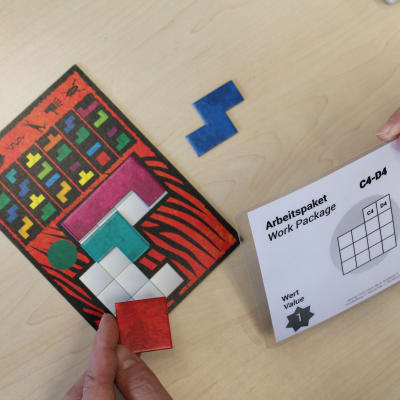
The UBONGO Flow Game is based on the classic UBONGO Game, in which players quickly place geometric shapes on a board in a similar way to Tangrams. The first player to fit the correct pieces into the given space on the board wins. The UBONGO Flow Game is an analogue serious game with a learning focus that uses materials from the original game. The only adopted element is the mechanism of placing pieces on a mould. However, the participants work together in teams with distributed roles and have an extended task (work packages) to be completed. The game simulates the effects of process changes on results. Project work with several workstations is developed further over three rounds by gradually optimising processes to create a more agile and open system. It is for high school students aged 14 and over, university students and a corporate training context. The design is characterised by a clear definition of roles, with processes of continuous optimisation in each round. Participants recognise the significance of effective collaboration on outcomes. It is based on the LEGO® Flow Game, developed by Karl Scotland and Sallyann Freudenberg in 2014, refined by Jan Fischbach in 2016.